Growth · 5 minute read
How to grow a newsletter without collecting the wrong readers
Build a newsletter growth loop around a clear signup promise, useful lead forms, consent, and first-month engagement—not just a larger subscriber count.
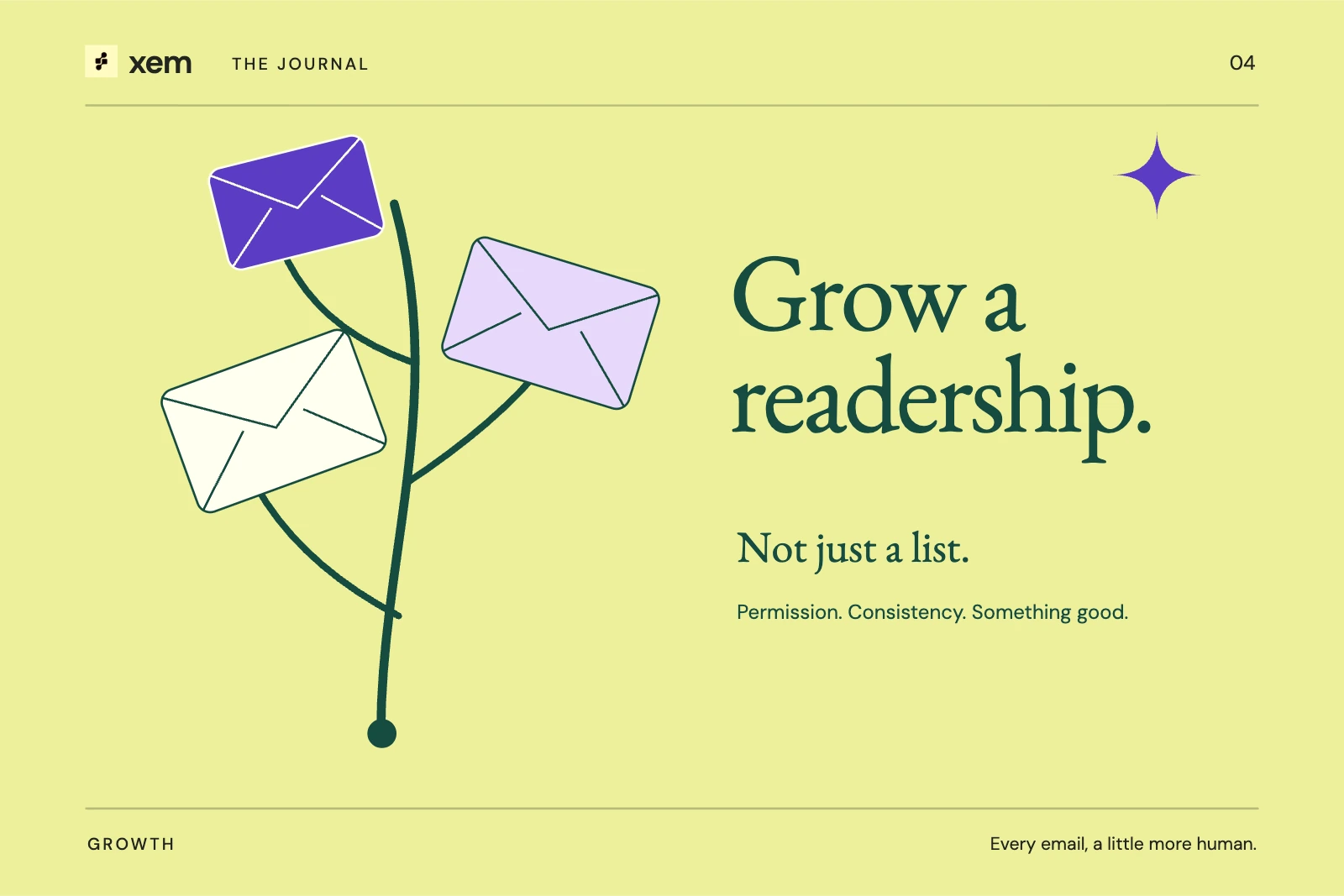
A newsletter with 800 readers who recognize the sender can be more useful than one with 8,000 addresses collected through an unrelated giveaway. The difference becomes obvious when the next edition arrives: one group expected it, and the other is trying to remember who you are.
Growth begins before the form. It begins with a promise specific enough that the right person can recognize themselves in it.
“Subscribe for updates” asks for trust without explaining the exchange. “A Friday note with three practical ways to improve your next customer email” tells a reader what they will get and when.
Make the promise narrow enough to keep
Write down the reader, the recurring benefit, and the cadence. Then check whether your team can deliver that promise for the next six editions.
A topic can be broad while the format stays dependable. A design studio might cover typography, accessibility, and creative process, but always send one annotated example and one practical exercise. The repeatable value is what makes subscribing feel worthwhile.
Show a real recent edition near the signup form. It answers questions that a polished promise cannot: how long is it, what does it sound like, and is it actually useful?
If you do not yet have an edition, write the first one before promoting the form. That is a better test of your offer than a list of future content ideas.
Ask for the data you will use
An email address may be enough to begin. A first name is useful only if you plan to use it thoughtfully. Company size, job title, and phone number should earn their place on the form.
A short form is not automatically a good form. It still needs a clear label, a useful explanation, an accessible error state, and a truthful consent experience. Do not preselect a marketing choice merely to increase the apparent signup rate.
Consent requirements vary by jurisdiction and context. The ICO's direct marketing guidance is a useful starting point for UK audiences; it is not a universal rulebook. Record the relevant source and preference so that the audience record can explain why future mail is being sent.
In Xem, use a lead form connected to the appropriate audience list. Review the actual fields and consent settings before embedding it. Test a real submission with a test address, including error handling and any configured verification flow.
Match the form to the page
A person reading an article about welcome emails has demonstrated interest in that problem, not every topic your company might publish.
Place a signup invitation where it continues the page's value. For example: “Get the next teardown of a real welcome sequence.” Avoid suggesting the reader has agreed to marketing simply because they downloaded a file or attended an event.
Use dedicated source labels where your tooling supports them. Keep those labels consistent: journal, webinar, and product are easier to compare than fifteen variations typed by different teammates. Xem's acquisition reporting can distinguish recorded form, import, and unknown provenance; do not assume it identifies an individual form unless that detail is actually recorded and exposed.
Make the first month part of acquisition
The signup is not the end of the growth loop. The first few messages determine whether the reader understands and wants the relationship.
Send the promised resource promptly through the workflow you have configured. Introduce the cadence. Deliver a strong edition before asking for referrals or a purchase. If you invite replies, make sure a person is responsible for reading them.
A useful first-month review asks:
- Did the person receive the promised resource?
- Were subsequent messages consistent with the form's promise?
- Did known delivery problems or early opt-outs cluster around one source?
- Did readers take the action the newsletter was designed to support?
Do not use a missing open as the only sign that a new reader has disappeared. Privacy features and blocked images make that inference unreliable.
Measure source quality as well as volume
Consider two fictional signup sources. A relevant article brings 100 subscribers, and a prize draw brings 600. The article's readers may respond more often and leave less often, but you need a defined observation window to compare them fairly.
Measure the audience at the same age after signup. Separate imported records from newly recorded opt-ins. Track opt-outs and known complaints alongside response. If your system lacks historical source detail, say so instead of reconstructing a precise acquisition story from current tags.
Web analytics can help compare form views and successful submissions when implemented with the appropriate consent and privacy controls. Email analytics alone usually cannot tell you the conversion rate of a page it does not measure.
Build a repeatable growth loop
Publish a useful edition. Turn one section into a public article. Let the article show what subscribing is like. Welcome new readers with the same promise. Use their questions to improve a later edition.
This loop can be slow initially. It has the advantage of attracting people for the thing you intend to keep sending.
For the next month, choose one source and one form to improve. Rewrite the promise, add a sample edition, test the submission flow, and review the first few sends. A clearer invitation is often more valuable than another popup.
Sources and further reading
- ICO: Direct marketing guidance, updated April 28, 2026.
- Yahoo: Sender requirements and recommendations — permission and engaged audiences are central to sustainable sending.
- Apple: Mail Privacy Protection.
- Next: a welcome sequence that delivers on the promise.
Written with AI assistance and checked against the linked sources. Examples are illustrative. Our editorial approach